Behavioural support · Evidence-based
Breaking free from
the screen and
back to life.
Gaming can start as escape and end as compulsion, affecting sleep, relationships, work and self-worth. At Tosha Life, I offer a non-judgemental, evidence-based space to understand your gaming patterns, address what's underneath, and rebuild a life with more balance and more choice.
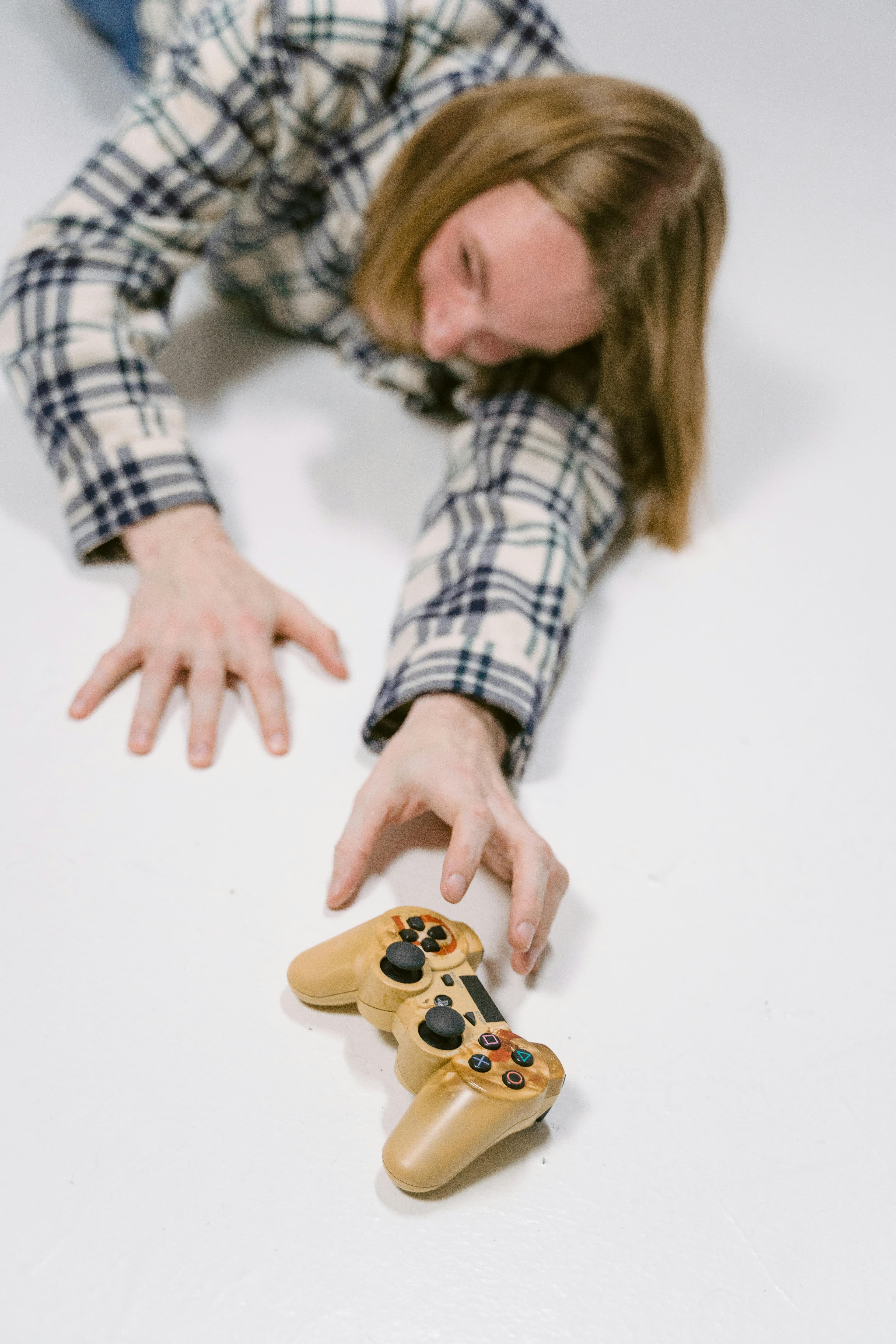
The game isn't the problem. The game is the solution your brain found for a problem we haven't named yet.
Is this support for you?
If any of these feel familiar…
Problematic gaming often creeps in gradually. If even one of these resonates, this work may help.
There's no shame in needing support. Gaming disorder is recognised by the WHO, and effective help exists.
You play for longer than you intend, hours vanish before you realise, and stopping feels impossible.
Gaming has started to replace sleep, meals, exercise, socialising, or responsibilities you used to manage.
You feel irritable, restless or empty when you're not playing, and relieved only when you return to the screen.
Your relationships are suffering: partners, parents or friends have expressed concern, and it's causing conflict.
You've tried to cut back on your own and it hasn't stuck, the pull is stronger than the intention.
You know gaming is affecting your life but the thought of stopping feels terrifying or impossible.
Your journey, session by session
A practical, five-phase path.
Recovery from problematic gaming isn't about willpower, it's about understanding the function the game is serving and building alternatives that satisfy the same needs.
Assessment
We map your gaming patterns: when, how long, what triggers a session, and what it gives you that real life currently doesn't.
Underneath
What need is the game meeting? Loneliness, boredom, avoidance, mastery, social connection? We name it together.
Alternatives
Building real-world sources of the same rewards: achievement, flow, belonging, stimulation, without the compulsion.
Boundaries
Practical, sustainable limits: not "never play again" but "play in a way that doesn't cost you the rest of your life."
Integration
Rebuilding the parts of life that gaming displaced, sleep, fitness, relationships, purpose, at a pace that sticks.
My approach
Evidence-based tools for behavioural change.
Gaming addiction responds well to structured cognitive-behavioural work, especially when combined with genuine curiosity about what the game is replacing.
Cognitive Behavioural Therapy
Identifying the thoughts and beliefs that maintain the cycle: "just one more game," "I'll start tomorrow," "this is the only thing I'm good at."
Behavioural activation
Gradually reintroducing real-world activities that provide genuine satisfaction, not as punishment, but as rediscovery.
Motivational interviewing
Building your own reasons for change, at your own pace. Change that comes from within is the only kind that lasts.
Gaming isn't the enemy. The compulsion is.
I won't ask you to hate something you love. The goal isn't abstinence, it's freedom: the freedom to choose when to play and when to stop, without the choice being made for you by the craving.
What changes, over time
What begins to change.
Most clients notice real shifts within 8–12 sessions, in their gaming habits, their sleep, and their sense of agency.
The pull loosens
Gaming becomes something you choose, not something that chooses you. The compulsive urgency fades.
Sleep returns
Screens go off earlier. Mornings feel different. Energy for real life starts coming back.
Relationships heal
Partners, parents and friends notice the change. Conversations get easier. Presence replaces absence.
You find new rewards
Exercise, creativity, social time, skill-building, the things that give you satisfaction without the hangover.
I was gaming 8 hours a day and my relationship was falling apart. Dr. Swapna helped me understand I wasn't broken, I was lonely. Once we addressed that, the gaming took care of itself.A client in his 20s · Online sessions, 2025
Not sure where to begin?
A free, confidential first call.
Twenty minutes. No pressure, no commitment. Just a quiet conversation so you can ask anything you'd like, including whether this is the right fit at all.
Book the Call20 minutesA focused, no-pressure conversation
Fully confidentialEncrypted · GDPR compliant
Anywhere in the worldOnline, in your own space
No. For most clients, the goal is a healthier relationship with gaming, not total abstinence. We work towards a balance where gaming is a choice, not a compulsion.
Read more
Articles on this work.
If you'd like to read before you reach out, these are written for the journey you may be on.
Understanding Pornography Addiction: Signs, Impact, and Pathways to Change
Not everyone who uses pornography has an addiction. A sex addiction specialist on the clinical picture, what research says, and what helps.
Sex Addiction Doesn't Have a Gender, But the Shame Does!
Compulsive sexual behavior disorder in women is real and underdiagnosed. What it looks like, why shame is the central barrier, and evidence-based paths to healing.
Explore other services
Other ways I can help.
Parenting Support
Practical, compassionate coaching for everyday parenting challenges, from toddler tantrums to teenage distance.
Read more →
Sex Addiction
Breaking the cycle of compulsive behaviour in a safe, confidential and non-judgemental space.
Read more →
Stress Management
Building resilience and finding balance with practical, science-backed techniques that fit your life.
Read more →Whenever you're ready
Ready to take the next step?
One quiet, confidential first call is all it takes to begin.