She did not come to talk about pornography. She came to talk about her marriage.
It took several sessions before she mentioned it: her husband's pornography use, which she had discovered two years earlier. She described her hurt, her sense of betrayal, the questions she could not stop asking herself. And then she said something that stayed with me: "Everyone keeps telling him he's an addict. But when I look at what he actually does, I am not sure that word fits. I just want someone to tell me what is actually happening."
He consulted me as he thought that he was addicted to pornography and in his profession he had to preach to others (which was his job profile) to not indulge in pornography. This dilemma of not following what one preaches was taking a toll on his mental health.
Another client consulted me as his pornography use was affecting his relationship with his girlfriend. He was getting attracted to other more beautiful girls similar to the girls that he was watching in porn videos.
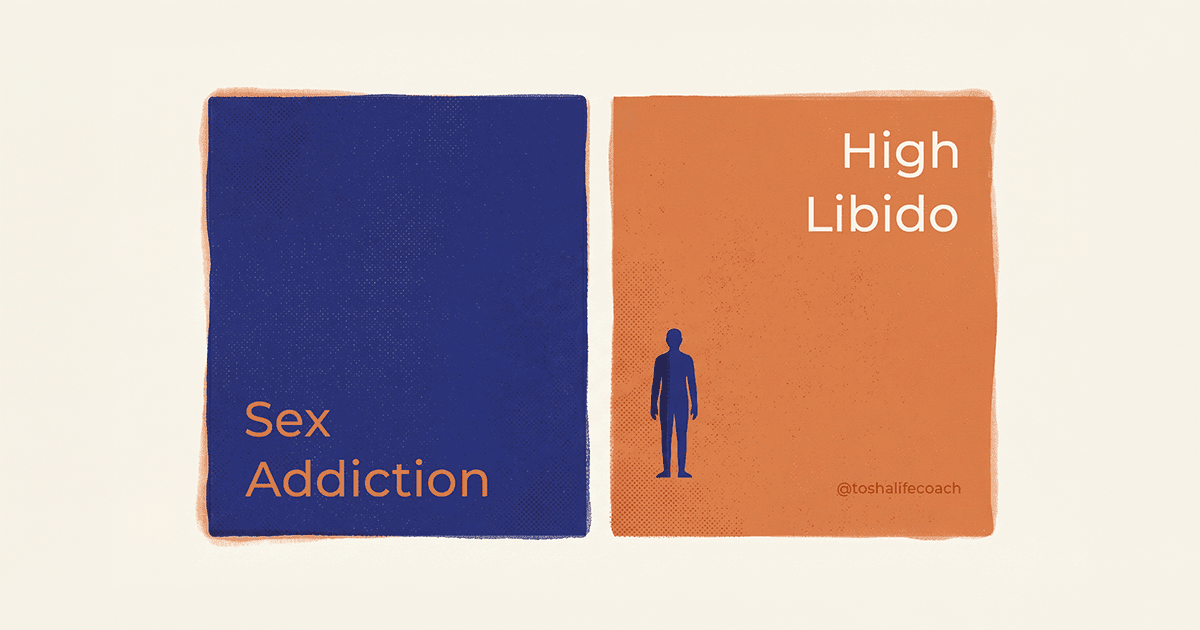
The word "pornography addiction" is used loosely, and often inaccurately. It covers three different groups of people: those who genuinely struggle to control their pornography use and are experiencing real harm, those who feel guilty about pornography use that is not actually compulsive, and those whose relationship with pornography is perfectly ordinary and who have been told otherwise. Understanding which group a person belongs to changes everything about how to respond.
What Makes Pornography Use "Problematic"
The WHO's ICD-11 (2022) classifies pornography use that has become compulsive as falling under Compulsive Sexual Behavior Disorder (CSBD), an impulse control disorder. The clinical criteria require three things: a persistent failure to control intense, repetitive sexual impulses, lasting at least six months, and causing marked distress or significant functional impairment.
Frequency is not the criterion. Amount is not the criterion. Whether you find the content morally acceptable is not the criterion. The clinical question is: can you control it, and is it causing real damage?
Research estimating global prevalence of problematic pornography use (PPU) in the largest cross-cultural study to date found a range of 3.2–16.6% across 82,243 participants in 42 countries, depending on how "problematic" was measured. A 2024 meta-analysis pooling 22 studies puts the figure at 13%. The range reflects a real measurement problem: when you include moral distress in the definition, the numbers climb steeply. When you restrict to loss of control and functional impairment, they fall.
Of those who meet clinical criteria, only 4–10% ever seek treatment. The people seeking help for pornography use are not a representative sample of everyone with a problem. They are often those whose distress is highest, which frequently means those whose shame is highest, not necessarily those whose behavior is most out of control.
What Internet Pornography Does to the Brain
The reason pornography use can become compulsive has a neurological explanation.
A landmark 2014 fMRI study by Voon and colleagues scanned the brains of men with problematic pornography use alongside men who don't use pornography. When shown cues predicting pornographic content, the PPU group showed significantly heightened activation in the ventral striatum, the brain region central to reward anticipation and motivation. The pattern mirrored what neuroscientists see in substance addiction: high motivation ("wanting"), without a corresponding increase in actual pleasure ("liking").
This is the mechanism behind a pattern I see in my practice. Someone continues watching pornography not because they are genuinely enjoying it, but because the urge to watch feels separate from, and stronger than, their capacity to decide otherwise. The satisfaction is diminishing. The desire to watch is not going away.
Reviews of the underlying neuroscience confirm that repeated exposure to internet pornography can produce neural changes: sensitized reward pathways, increased cue reactivity, and dopaminergic patterns similar to those observed in other behavioral compulsions. The internet aspect matters. Infinite novelty, instant access, and an easier shift from one type of content to the next create a stimulation profile that did not exist before broadband.
One useful way to explain it: the brain's desire system and the brain's pleasure system are not the same system. They can become uncoupled. When that happens, a person can experience intense craving for something that no longer satisfies them. The craving drives the behavior; the behavior does not deliver; the craving returns. That is not a moral failure. It is a brain pattern, and it is treatable.
The Real-World Impact
When pornography use becomes genuinely compulsive, the effects show up in three areas.
On sexual function: A 2022 study published in the International Journal of Impotence Research found that for each unit increase in pornography compulsivity scores, the odds of erectile dysfunction increased by 6%. Importantly, pornography use frequency alone was not predictive. Recreational use did not drive dysfunction; compulsive use did. Clinical data from India, where 589 individuals sought treatment for pornography-related concerns, found that 39.4% reported erectile dysfunction and 33.6% reported premature ejaculation. The mean age was 29. These are not older men with age-related changes. They are young men whose sexual response has been conditioned to a screen environment that real life cannot replicate.
On relationships: The impact on partnerships is real but nuanced. Research on couples shows that 80% of men and 68% of women report using pornography primarily without their partner. Whether this causes harm depends heavily on whether both partners are aware of, and comfortable with, the pattern. When one partner discovers the other's use and feels betrayed, the relational damage is not always about the pornography itself. It is about trust, about different expectations, and sometimes about values that were never made explicit.
On intimacy and presence: People who use pornography compulsively often describe a growing preference for it over real sexual connection. Not because it is better, but because it is easier, lower-risk, and requires less emotional vulnerability. Over time, this preference can reduce the capacity for real intimacy.
Who It Actually Affects and Who It Does Not
Here is something the popular conversation gets wrong: most people who feel bad about pornography use are not compulsive users.
Research by Grubbs and Perry has consistently shown that moral incongruence, the distress that comes from a conflict between one's values and one's behavior, is a stronger predictor of self-reported pornography problems than actual usage frequency or loss of control. People who strongly disapprove of pornography morally or religiously are more likely to describe themselves as "addicted" regardless of whether they have lost control.
In a nationally representative sample, 11% of men and 3% of women described themselves as addicted to pornography. But clinical CSBD criteria require demonstrable loss of control and real functional harm. The gap between self-perception and clinical reality is largely caused by moral distress. According to ICD-11 criteria, CSBD should not be diagnosed when distress comes entirely from moral or religious disapproval.
For many South Asian readers, this matters enormously. India ranks 3rd globally in online pornography consumption, yet cultural shame around sexuality is acute. Among 589 treatment-seekers in an Indian clinical study, 98.98% were male, and many reported having sought help because of shame rather than because they had tried and failed to stop. These are people responding to cultural messaging, not always to clinical symptoms.
This does not mean the distress is not real. Moral incongruence causes genuine suffering. But it calls for a different kind of support.
What Actually Works
For people who do meet clinical criteria for problematic pornography use, the evidence for treatment is strong.
A 2024 meta-analysis of 20 studies involving 2,021 participants found that psychotherapy produced large treatment effects for PPU (effect size d = 1.05). Craving reduction showed an even larger effect (d = 1.18). Cognitive Behavioral Therapy (CBT) and Acceptance and Commitment Therapy (ACT) were equally effective and are the most researched approaches.
CBT works by identifying the emotional triggers behind pornography use (loneliness, stress, avoidance, boredom), disrupting the automatic sequence from trigger to behavior, and building alternative coping strategies. The goal is not to create shame about past use. It is to restore voluntary control over a pattern that has stopped being voluntary.
Mindfulness-based interventions have also shown consistent benefits for PPU: reduced compulsive symptoms, lower emotional distress, and improved general sexual wellbeing. Mindfulness addresses a specific mechanism in PPU: the automatic, non-conscious quality of the response to triggers. Developing the capacity to notice an urge without immediately acting on it is, for many people, the first experience of genuine control they have had over this behavior in years.
For people dealing with moral incongruence rather than compulsive use, the approach is different. Here, the work is examining the beliefs themselves. Whether the shame is proportionate to actual harm. Whether the values driving the shame are your own or inherited. Whether the pornography use, removed from its shame context, is genuinely problematic or simply something you were taught to feel terrible about.
Both call for support. The support just looks different.
Five Questions Worth Asking Honestly
If you are reading this because you are unsure where you fall, these questions will give you more clarity than any self-assessment quiz:
1. When you decide to stop, can you? Not: Do you want to stop? But: When circumstances require it, when you decide it matters, does stopping happen? If yes, consistently, that is important clinical information.
2. Is the pleasure still there? Are you using pornography because you genuinely enjoy it, or because stopping the urge feels harder than giving in? The presence or absence of genuine satisfaction matters clinically.
3. What is the actual damage? List it concretely: relationships harmed, work affected, money spent, sexual function impaired, your own clearly held values violated. Not embarrassment. Actual harm.
4. Where is the distress coming from? Is it the loss of control that distresses you, or the fact that you use pornography at all? These two sources of distress are different problems.
5. Who told you that you had an addiction? Was it a trained clinician who assessed you against diagnostic criteria? Or was it a partner, a religious community, or a version of yourself that absorbed the message that any pornography use is evidence of something wrong? The source of the diagnosis matters.
You Are Not the Worst Version of This
I have worked with people on both sides of this line. The ones who genuinely needed help with compulsive patterns. And the ones who needed help seeing that the problem was the shame, not the behavior.
What I want both groups to hear is the same: this is a pattern, and patterns can be changed. Whether the work is behavioral (building control where control has been lost) or cognitive (examining what you were taught to believe about your own sexuality), it is work that is worth doing.
The question you keep avoiding is usually the one most worth asking.