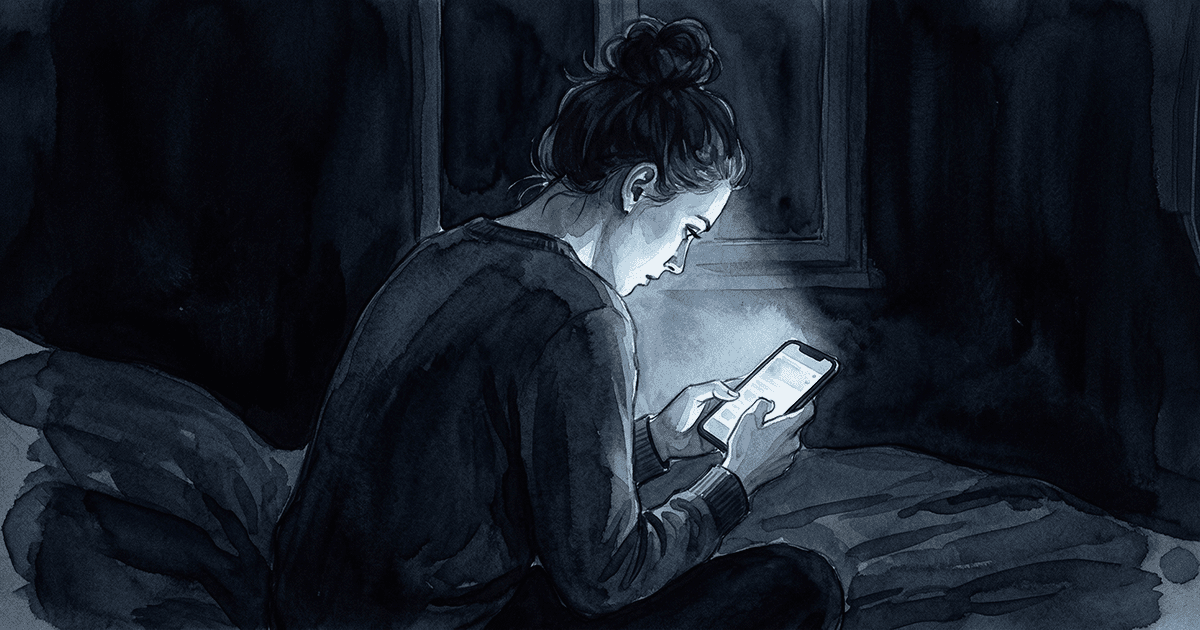
Martha opens her phone to find a notification. Someone has sent her a video. It is her face, unmistakably her face, but the body is not hers. The voice sounds like hers too. It is explicit. It is degrading. And it is everywhere.
Martha did not make this video. She did not consent to it. But AI did not need her consent. It needed only a few seconds of audio from her social media and a handful of publicly available photos. Within minutes, someone created a deepfake, and within hours, it was shared hundreds of times.
She reports it. The platform says it will "look into it." The police say there is not much they can do. Her friends tell her to "just ignore it." But how do you ignore something that feels like a violation of your body, your identity, your sense of safety?
Sujata's classmate shares a post on Instagram in which he shares the pictures of three female classmates and says this is why we don't attend the classes in college. Sujata is already struggling with body image issues and this post traumatizes her further, leading her into depression.
This is not a hypothetical scenario. This is happening to women right now, in numbers that should alarm us all. The Epstein files, which is a topic of discussion of almost every household in the whole world right now, also compel us to think about this topic.
The Statistics Are Worse Than You Think
The research on online harassment is unambiguous: women are 27 times more likely to face harassment online than men (OPDV New York, 2024).
UN Women reports that 38% of women globally have personal experiences of online violence, and 85% have witnessed digital violence against others. According to BroadbandSearch (2025), lifetime victimization among young people rose from 33.6% in 2016 to 58.2% in 2025, nearly doubling in less than a decade.
For adolescent girls specifically, the numbers are even starker. Pew Research Center (2022) found that 54% of girls ages 15 to 17 have experienced at least one cyberbullying behavior, compared to 44% of boys. Teen girls are more likely than boys to say they have been cyberbullied because of their physical appearance (17% vs. 11%) or their gender (14% vs. 6%).
And the nature of the harassment women face is different. While men experience more overall harassment online, Pew Research Center (2021) documents that women experience more severe forms: sexual harassment (16% of women vs. 5% of men), stalking (13% vs. 9%), and sustained harassment campaigns.
Perhaps most telling: women are more than twice as likely as men to say they were extremely or very upset by their most recent encounter with online harassment (34% vs. 14%).
This is not just about hurt feelings. This is about safety, mental health, and the ability to exist online without fear.
Why Women Bear the Burden?
The answer is, it's an integral part of the culture. Gender inequality is an evident fact of Indian culture and gets reflected in many Indian traditions, rituals, gender roles, etc. Online spaces reflect and amplify offline gender inequalities and in many cases, they make them worse.
The Gendered Nature of Online Violence
47% of women who have been harassed online say they experienced harassment because of their gender, compared to just 18% of men (Pew Research Center, 2021).
The harassment women experience is often explicitly gendered: sexual harassment, body-shaming, threats of sexual violence, and image-based abuse. Research published in 2020 found that for girls, but not for boys, online sexual harassment correlated significantly with anxiety and depressive symptoms.
The disparity shows up everywhere:
- 21% of young women ages 18-29 reported experiencing online sexual harassment compared to 9% of men (BroadbandSearch, 2025)
- 29% of girls vs. 20% of boys received unsolicited explicit images, with 35% of girls aged 15-17 receiving such content (BroadbandSearch, 2025)
- 77% of women gamers experience gender-specific discrimination when gaming, including name-calling, inappropriate sexual messages, and dismissiveness (Gender Justice Project, 2023)
Women in Professional Spaces Face Unique Attacks
The harassment extends into professional contexts, often designed to silence women or push them out of their careers.
UN Women's 2025 survey across 119 countries found that 75% of women journalists and media workers had experienced online violence in the course of their work, an increase from earlier surveys. Even more alarming: 42% of 2025 survey participants identified offline harm associated with online violence, more than double the 20% who reported this in 2020.
In workplace settings, women are 20% more likely to be bullied than men, with 63.3% of workplace cyberbullying targets being female (Market.biz, 2025). The career consequences are devastating: in 67% of cases, the target of workplace cyberbullying ends up leaving their present job (Market.biz, 2025).
This is not incidental. This is systematic silencing.
Algorithms Amplify the Harm
It is observed that social media algorithms amplify misogynistic content.
A 2024 study by UCL found that TikTok's algorithm, after just five days, was presenting four times as many videos with misogynistic content such as objectification, sexual harassment, or discrediting women (increasing from 13% of recommended videos to 56%).
The research indicates that algorithmic processes target people's vulnerabilities, such as loneliness or feelings of loss of control, and gamify harmful content. This phenomenon, increasingly referred to as "algorithmic violence," constitutes a structural form of harm that disproportionately targets women and marginalized communities (EPALE EU, 2024).
Amnesty International UK's 2025 polling found that 70% of respondents reported encountering misogynistic content on TikTok (rising to 80% for women), followed by Instagram (61%), Twitter/X (37%), YouTube (31%), and Facebook (30%).
Women are not imagining this. The systems are designed to amplify the very content that harms them.
The New Frontier: AI-Powered Harassment
If traditional cyberbullying was bad, AI has made it exponentially worse.
The Deepfake Crisis
The statistics are staggering. Research shows that around 98% of deepfake videos circulating online are non-consensual porn, nearly all of which target women. More specifically, 96% of deepfakes are nonconsensual sexual deepfakes, and 99% of sexual deepfakes are of women (Views4You, 2025).
The growth is explosive. The number of deepfake porn videos produced in 2023 was reported to be 464% higher than in 2022 (Security Hero, 2023).
And this is not just happening to celebrities. UN Women reports that 92% of women reporting deepfake abuse are ordinary women, not celebrities. Globally, 57% of women reported experiencing image-based abuse (Ms. Magazine, 2024).
In August 2024, many teachers and female students in South Korea were victims of deepfake images, with Telegram group chats created specifically for image-based sexual abuse of women, including middle and high school students, teachers, and family members.
Voice Cloning and Fraud
Deepfake video is only part of the problem. Voice cloning has crossed what researchers call the "indistinguishable threshold," where a few seconds of audio now suffices to generate a convincing clone with natural intonation, rhythm, emphasis, emotion, pauses, and breathing noise (Fortune, 2025).
Modern AI can clone a person's voice with 85% accuracy using just 3-5 seconds of audio (Right-Hand AI, 2025). 1 in 4 adults have experienced an AI voice scam, with 1 in 10 having been personally targeted (Norton, 2025).
Global losses from deepfake-enabled fraud reached over $200 million in Q1 2025 alone (ScamWatch HQ, 2025), and deepfake-enabled vishing surged by over 1,600% in the first quarter of 2025 compared to the end of 2024 (Right-Hand AI, 2025).
The Inadequacy of Current Protections
Legal protection is shockingly weak. The World Bank (2024) reports that fewer than 40% of 190 economies worldwide have laws specifically addressing cyber-harassment. In Sub-Saharan Africa, only 25% of economies have such laws. In the Middle East and North Africa, only 20%.
Even when laws exist, enforcement is inconsistent. Research on reporting mechanisms found that current mechanisms, whether platform-based or legal, rarely deliver outcomes that women find meaningful. They are characterized by slowness, opacity, and low perceived impact.
Victims frequently report feeling dismissed or not believed when approaching legal authorities. The reporting process itself can be re-traumatizing.
While some progress is being made, the U.S. introduced the "Preventing Deepfakes of Intimate Images Act" in March 2025, and laws like the TAKE IT DOWN Act and Florida's Brooke's Law were passed in 2025, but regulation lags far behind technological advances.
The Mental Health Toll
The psychological impact of online harassment on women is not abstract. It is measurable, severe, and often long-lasting.
Depression, Anxiety, and PTSD
Research published in PMC (2024) documents that women who experience online violence are more likely to suffer from depression, anxiety, PTSD, and decreased self-esteem. The Conversation (2024) found that women who experienced online sexual harassment reported significantly poorer mental health than those who hadn't, with anxiety, depression, trauma, and poor body image all being more likely.
The gender difference is stark. Research shows that female participants were more likely to develop both traditional and cyberbullying-related anxiety.
Self-Harm and Suicidal Ideation
The link between cyberbullying and suicide risk is well-documented. Youth who experienced cyberbullying have 1.7x higher odds of suicidality (ideation or attempts) (JMIR, 2018). The Megan Meier Foundation (2024) reports that children and young people under 25 who are victims of cyberbullying are more than twice as likely to self-harm and engage in suicidal behavior.
Research published in Nature Human Behaviour (2024) found that female cyberbullying victimization rates increased from 3.8% to 6.4% over a three-year period, and female respondents developed a high rate of suicidal ideation compared to male participants due to experiencing cyberbullying.
Body Image and Self-Esteem
Negative comments, body-shaming, and online harassment can severely impact self-esteem and body image. Research documents long-term consequences including lowered self-esteem, distorted body image, eating disorders, and insecurities lasting a lifetime.
Studies show that experiences of appearance-related cyberbullying positively correlate with increased concerns about body shape, body shame, and eating disorder symptomology, while negatively correlating with body esteem and body appreciation.
Female bodies are often more scrutinized and evaluated than male bodies, contributing to heightened sensitivity to body image and self-esteem issues among women.
Who Is Most at Risk?
While all women are vulnerable, certain groups face compounded risks:
Women of color face intersectional harassment. Research shows that 65% of Black women surveyed reported experiencing some form of sexual harassment, and 53% reported they had been subject to racist remarks. Sexist hostile tweets feature intersectional attacks: anti-Black women sexist tweets included attacks for being poor, and anti-Asian tweets included attacks for being too docile (SAGE Journals, 2023).
LGBTQ+ women experience higher rates of harassment. 64% of LGBTQ+ respondents have been harassed online (American University, 2024), with the rate of online harassment at 28.5% among lesbian and bisexual females, compared to 22.3% in gay and bisexual males (Avast, 2024). Nearly all victims of cyberbullying (93%) report negative mental health effects (American University, 2024).
Young women aged 18-24 are deemed at greater risk of being exposed to every form of cyber violence (UN Women, 2024).
What Actually Helps
Despite the grim statistics, there are evidence-based strategies that work.
1. Cognitive Behavioral Therapy (CBT) and Dialectical Behavior Therapy (DBT)
Research shows that effective interventions include self-regulation, digital detox, CBT, and school-based awareness programs. CBT helps address the negative thought patterns that sustain distress after harassment.
When you experience online harassment, your mind may spiral into beliefs like "This will never go away," "Everyone has seen this," "I am ruined." CBT teaches you to identify and challenge these thoughts, not to minimize what happened, but to prevent the harassment from colonizing your entire sense of self.
DBT, which combines cognitive strategies with mindfulness and emotion regulation, is particularly effective for managing the intense emotional reactions that can follow severe harassment or image-based abuse.
2. Digital Literacy and Self-Protection Strategies
Knowledge is power. Research shows that 65% of victims have used protective strategies such as changing their contact information, asking for help, reporting the content, or disconnecting from online networks or devices.
Digital literacy initiatives improve participants' skills by helping them understand privacy settings, recognize harmful content, and know how to use reporting mechanisms effectively. Programs that combine positive messages and just-in-time education help targets protect their location, document, deflect, and respond to harassment.
Practical steps include:
- Reviewing and tightening privacy settings on all platforms
- Using different passwords for different accounts
- Being cautious about what personal information is publicly available
- Knowing how to report, block, and document harassment
- Understanding that leaving a platform temporarily is a valid self-protection strategy, not weakness
3. Social Support Networks
Research confirms that perceived social support is an important protective factor against mental health consequences of cyberbullying victimization. Support from family, friends, and school staff have been associated with a lower risk of being bullied and cyberbullied.
For women specifically, informal support and trusted people were significant in young women's experiences of dealing with online dating abuse. Research on intimate partner violence suggests that social support from relatives and friends, specifically emotional and instrumental, is a protective mechanism.
Isolation amplifies harm. Connection reduces it.
4. Platform and Systemic Accountability
While individual strategies help, the burden should not fall entirely on women. Platforms must do better.
Many teens believe platforms and schools do not handle cyberbullying well. Even when detection rates improve, Instagram's proactive detection improved to 96.9% by 2024, user satisfaction remains low because detection is not the same as meaningful response.
Advocacy for stronger legal frameworks, algorithm transparency, and platform accountability is not separate from mental health work. It is part of it. When we push for systemic change, we protect the next generation of women online.
This Is Not Your Fault
If you have experienced online harassment, I want you to hear this clearly: this is not your fault.
You did not invite it by having a social media account. You did not cause it by being visible online. You did not deserve it because of what you posted, said, or looked like.
The shame belongs to the people who harass, the platforms that enable it, and the legal systems that fail to protect you. Not to you.
The psychological toll of online harassment is real. If you are experiencing depression, anxiety, intrusive thoughts, or difficulty functioning, reaching out for professional support is not weakness. It is self-protection. Therapy, particularly trauma-informed CBT or DBT, can help you process what happened and rebuild your sense of safety.
You do not have to carry this alone. And you do not have to stay silent.
The more women speak about online harassment, the more we name it, measure it, and refuse to accept it as the cost of existing online, the harder it becomes to ignore. Your voice matters. Your safety matters. And the digital world you deserve, one where you can exist without fear, is worth fighting for.
✦ Written with AI Assistance
The research and initial draft for this article were developed using Claude by Anthropic. Dr. Swapna Vithalkar reviewed and shaped the final content.